Evidences for SDG2


SDG2 – Zero Hunger


2.2 Campus Food Waste

2.2.1 Campus food waste tracking
Does your university as a body measure the amount of food waste generated from food served within the university? If food provision is outsourced this will include requiring this data to be tracked.

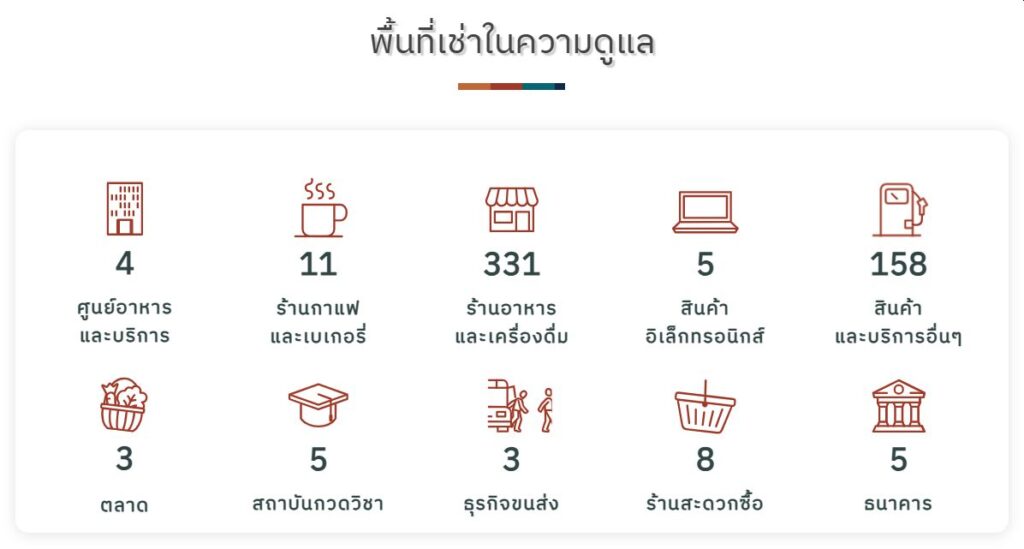
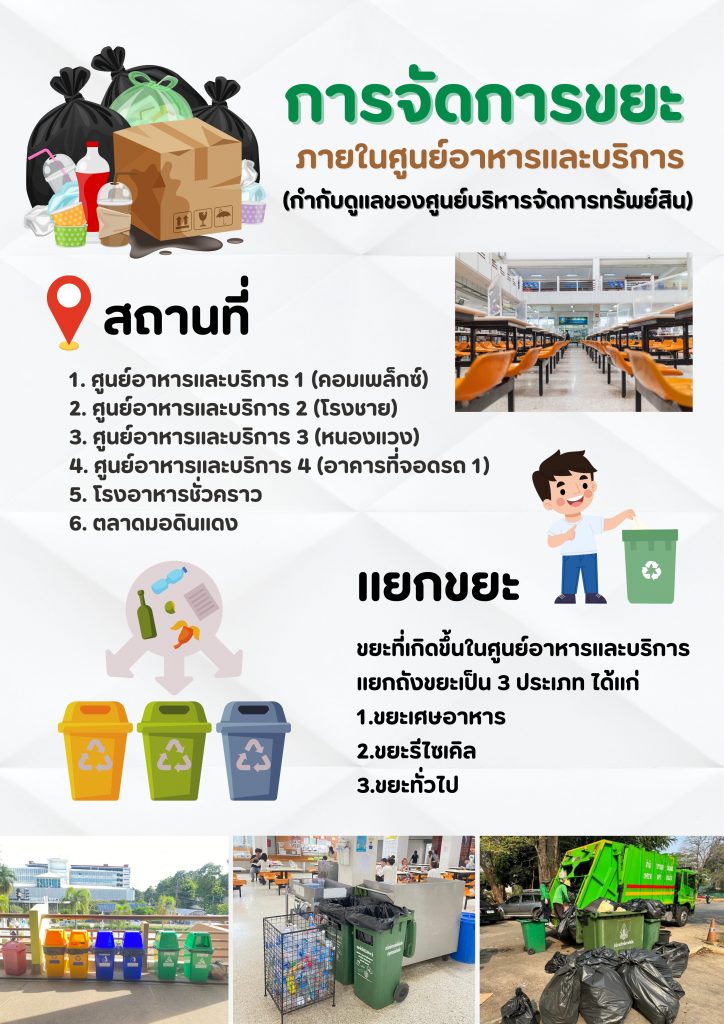
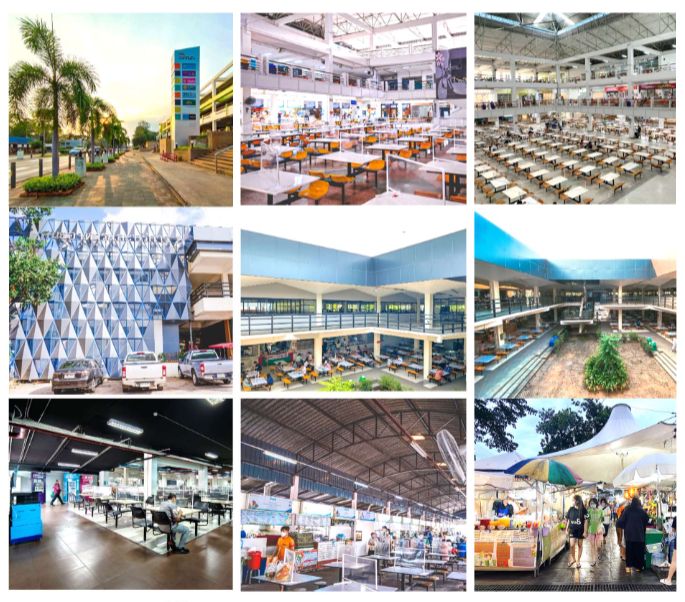
        Khon Kaen University attaches great importance to waste management within the university campus to ensure sustainability goals. To achieve sustainability in solving hunger problems and creating food sustainability, KKU conducts green university policies that include food waste management in all food centers. KKU by Centre for Asset Management (https://asset.kku.ac.th/) is responsible for overseeing the operations of the food centers, including:
        1. Food and Service Center 1 (Complex)
        2. Food and Service Center 2
        3. Food and Service Center 3 (Nong Waeng)
        4. Food and Service Center 4 (Parking Building 1)
        5. Tempolary Food and Service Center
        6. Mor Din Daeng Market (Night market)


2.2.2 Campus food waste
Food waste per campus population


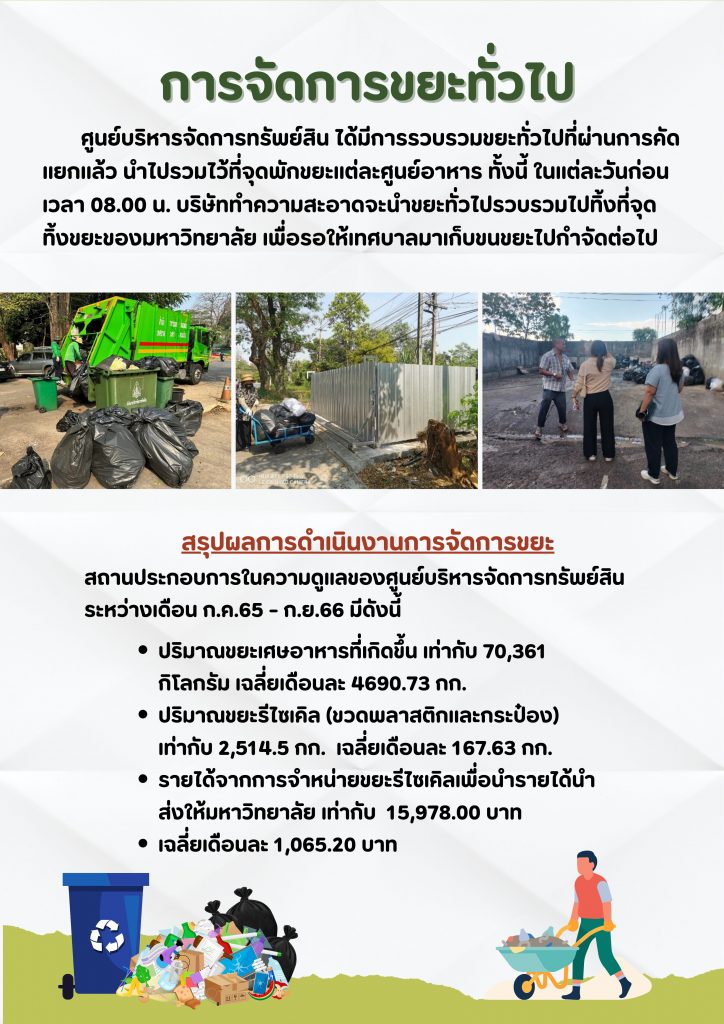
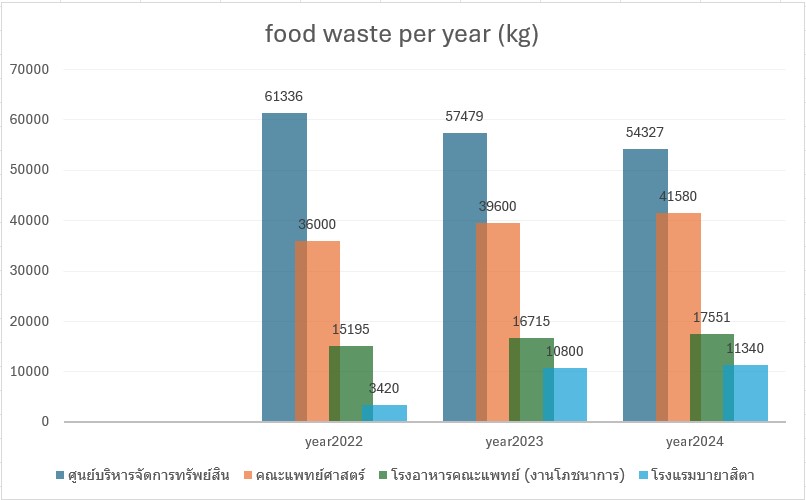
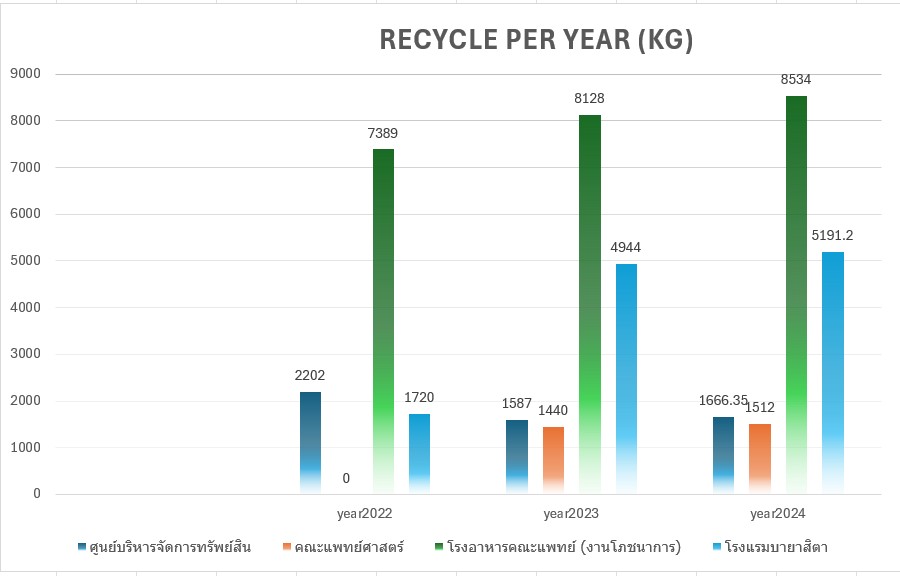
The amount of waste generated from food production, storage, processing, and consumption in all food courts is measured and tracked. KKU categorized the wastes into 2 types: 1.Food waste and 2.Recyclable waste. By source of waste, there are 2 types of sources: 1.Waste generated by personnel within the university 2.Waste generated by services that provide for outside such as Bayasita Hotel, Srinagarind Hospital Nutrition Department Faculty of Medicine, as shown in the following graphs:
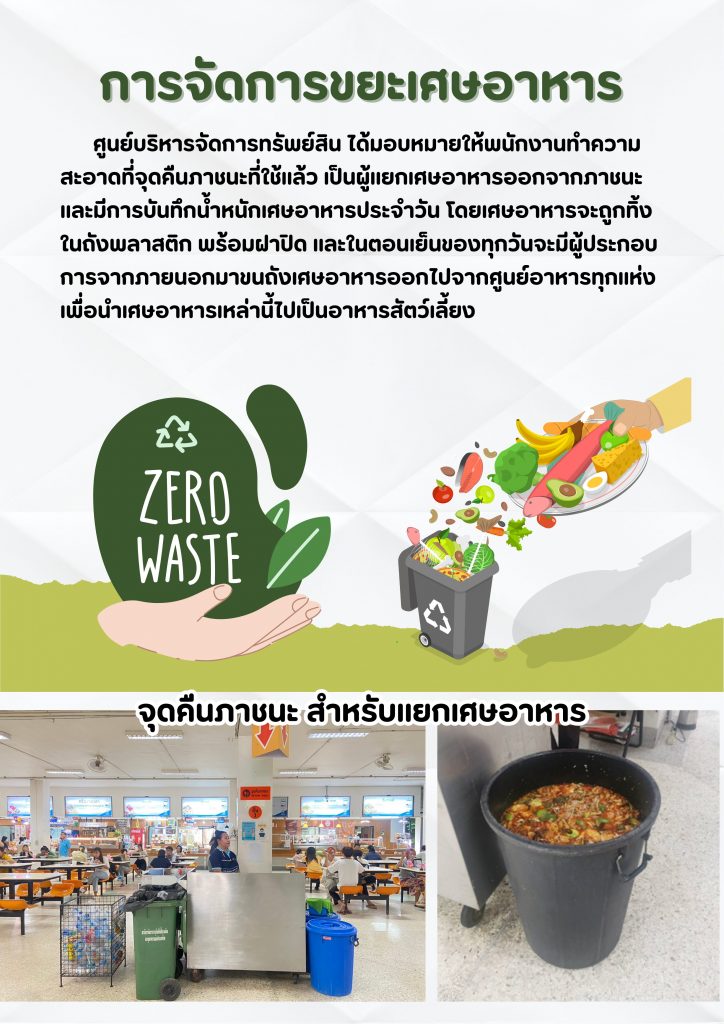
Food Waste Management:
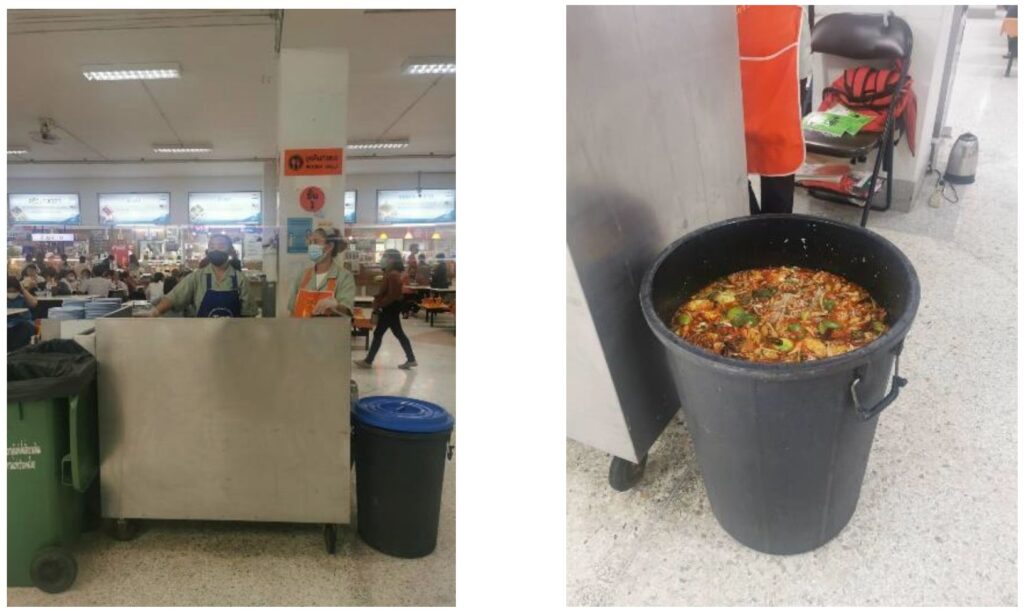
Asset Management Center of KKU has assigned cleaning staff to collect food scraps from the containers and record the weight of food each day. In the evenings every day, an outside operator takes these food waste to be process as pet food.
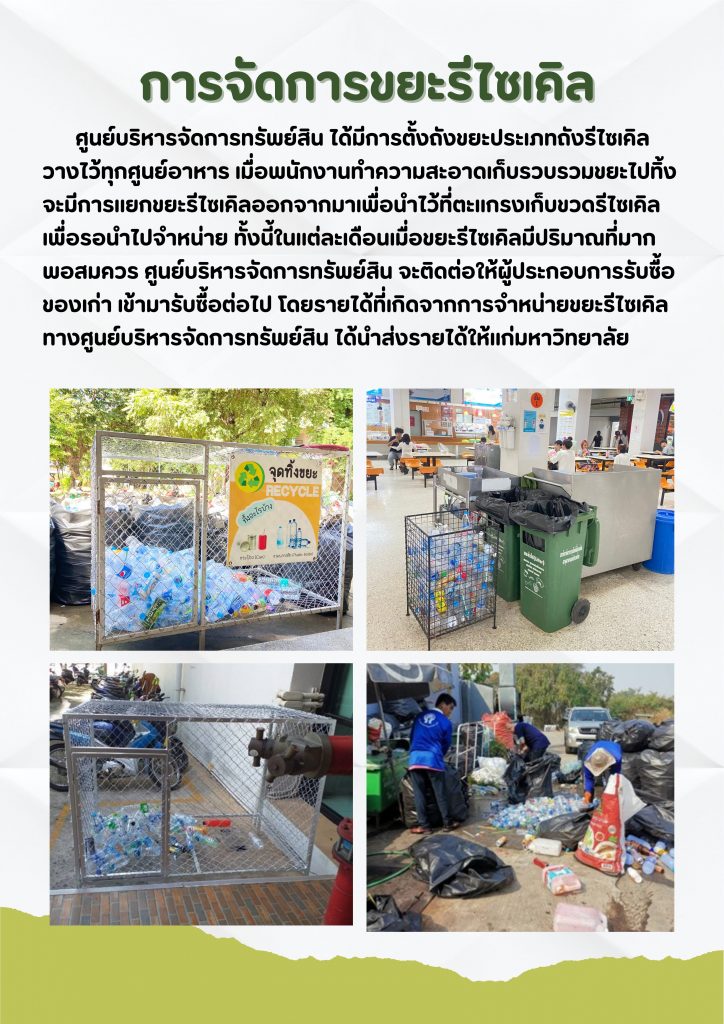
Recyclable Waste Management:
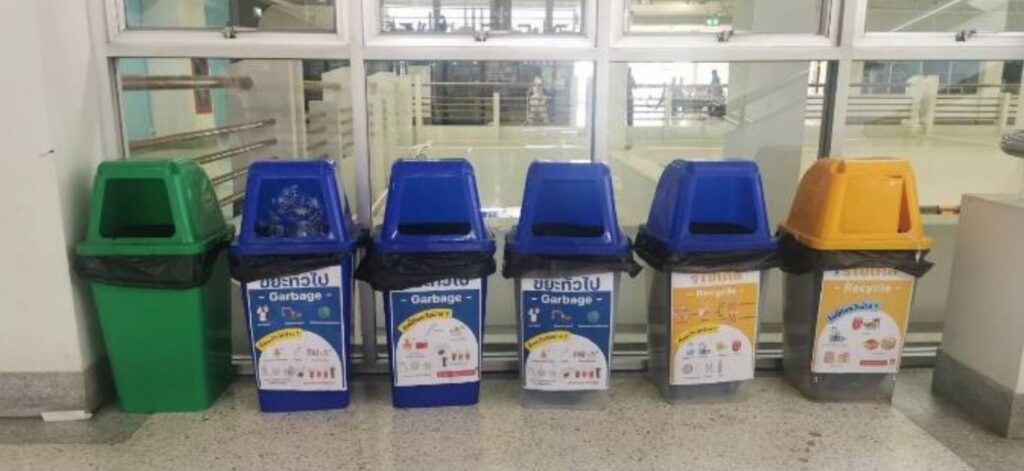
Asset Management Center of KKU has set up recycling bins placed in every food court. When the cleaning staff collects recyclable waste such as plastic bottles, the waste will be separated and collected in storage for sale each month. Asset Management Center will sell recyclable waste to outside operators for the income of the university.
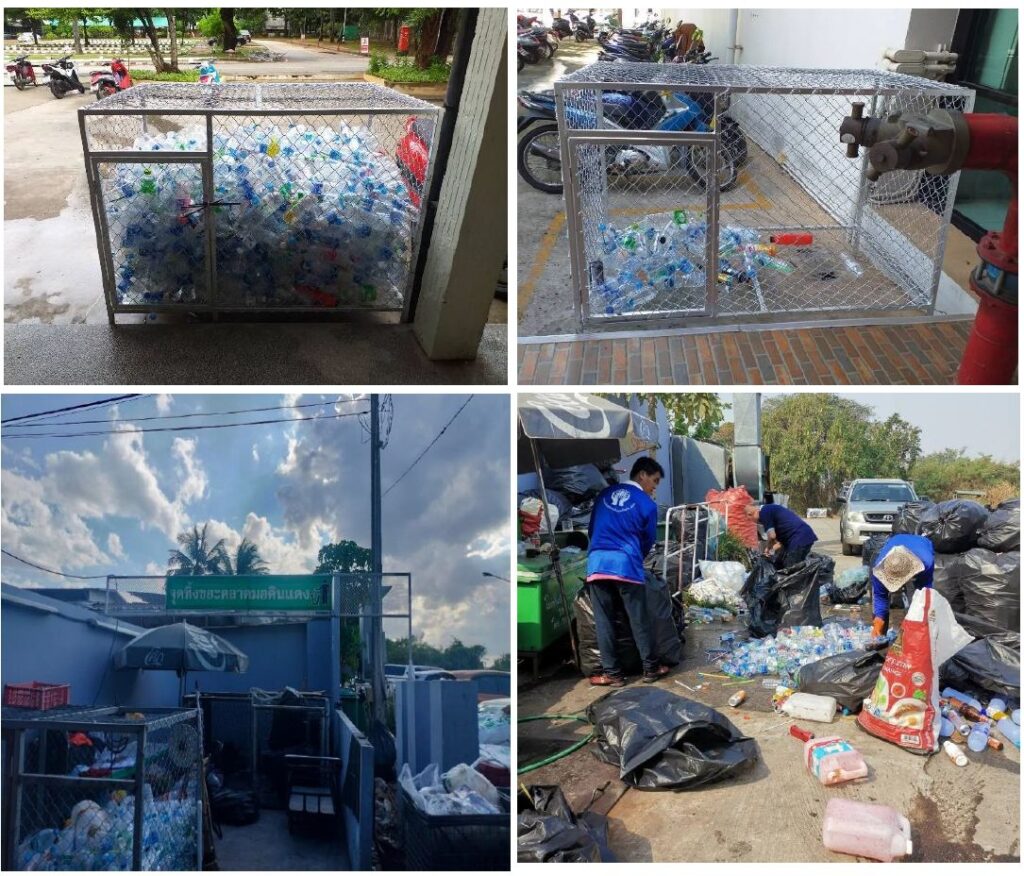
Waste management in the Faculty of Medicine and Hospital:
Faculty of Medicine KKU designated waste disposal points and waste sorting area in the hospital. Staff is trained to be able to separate waste properly. There is a waste recycling program aim to add value and improve waste management in accordance with the environmental, health, and safety management policy. Garbage disposal operated by Khon Kaen Municipality to dispose of waste once a day by garbage compression truck. Nutrition Department Srinagarind Hospital manages food waste from patient services by making a record of the food waste every month and auction of food waste to outside operators.

2.5.4 Sustainable food purchases
Does your university as a body prioritise purchase of products from local, sustainable sources?


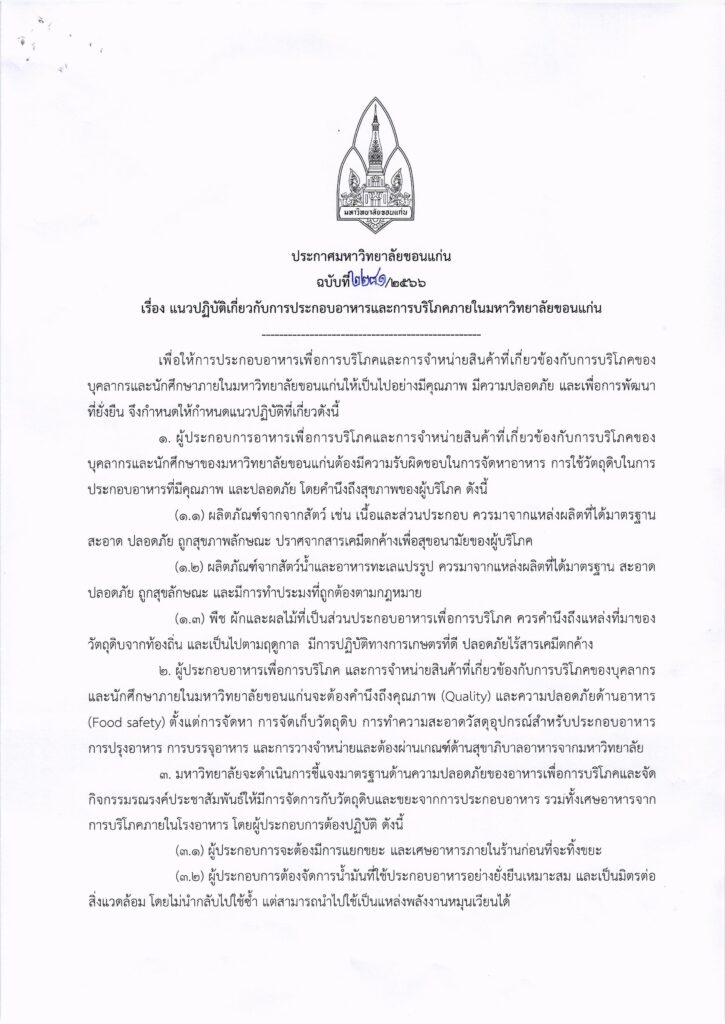
Khon Kaen University Announcement
No. 2281/2566
Subject: Guidelines for Food Preparation in Khon Kaen University
--------------------------------------------------
        In order that food preparation and the sale of consumable goods to the personnel and students of Khon Kaen University are based on the principles of quality, safety and sustainable development, the following guidelines have been stipulated:
        1. Food preparation and food stall entrepreneurs and entrepreneurs, who sell consumable goods, such as food items and goods to the personnel and students of Khon Kaen University, must be responsible when using raw materials and when providing quality and safe food. The health of the consumers should be considered in the following ways:
        (1.1) Products from animals, such as meats and other ingredients, should be obtained from standard, clean, safe and hygienic production sources. Regarding the consumers’ hygiene, these products should be free from any chemical residues.
        (1.2) Products from aquatic animals and manufactured seafood should be obtained from standard, clean, safe and hygienic production sources, where the fishing is performed legally.
        (1.3) Plants, vegetables and fruits that are cooking ingredients should be obtained locally and should be purchased according to the season. Moreover, these ingredients should be obtained from good governance farms, and should be free from any chemical residues.
        2. Food preparation and food stall entrepreneurs and entrepreneurs, who sell consumable goods and goods to the personnel and students of Khon Kaen University must take into account both quality and food safety. This includes the steps of obtaining the items and storing the raw materials, as well as cleaning the tools and equipment that are used in cooking, packaging, and selling – all of which must pass the food hygiene criteria of the University.
        3. The University will clarify the standards of food safety and will carry out a campaign and conduct public relations in order to manage the raw materials and the waste from cooking, including the management of leftover food in the cafeterias. The relevant entrepreneurs are to observe the following:
        (3.1) Entrepreneurs must sort the waste and food remains in their shops before disposal.
        (3.2) Entrepreneurs must appropriately manage the oil that has been used for cooking based upon environmentally-friendly standards, without reusing it. Instead, the oil must be used as a source for recyclable energy.
        (3.3) Entrepreneurs must use packaging that can rapidly biodegrade so that negative impacts are not brought upon the environment.
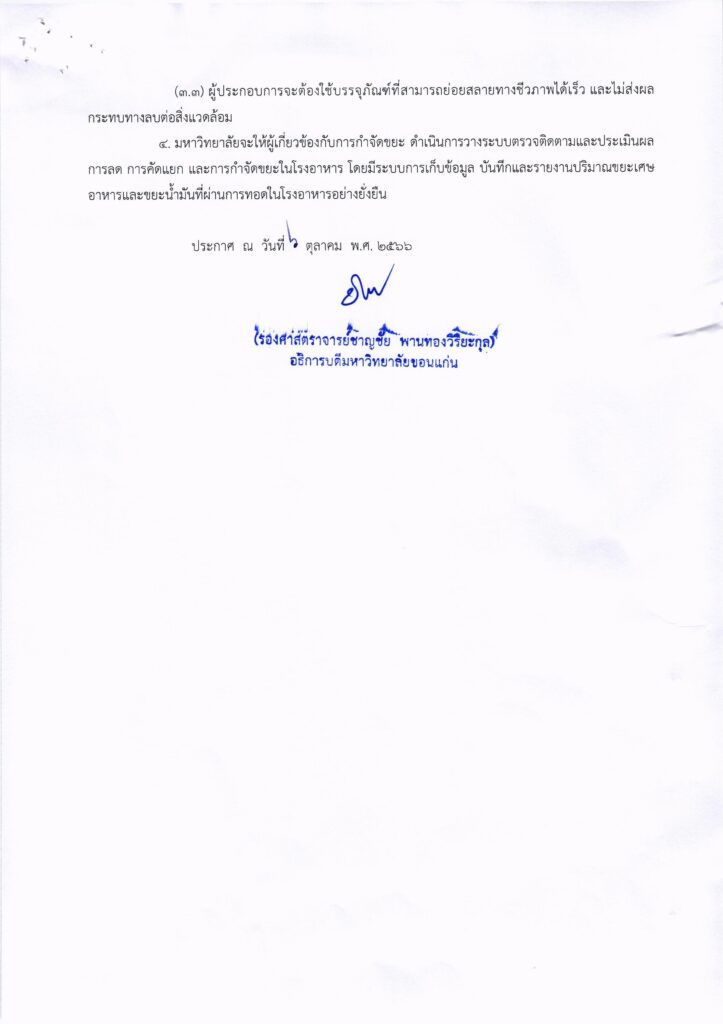
        4. The University will appoint a relevant unit, which will be responsible for waste management, and which will establish the systems for monitoring and assessing the decrease, as well as for sorting and disposing of waste in the cafeterias. A data collection system will be established, and the amount of food remains and cooking oil wastes from the cafeteria will be recorded and reported.

Issued as of October 6, 2023.

Assoc. Prof. Charnchai Panthongviriyakul, M.D.
President

แนวปฏิบัติเกี่ยวกับการประกอบอาหารและการบริโภคภายในมหาวิทยาลัยขอนแก่น

Scroll to Top